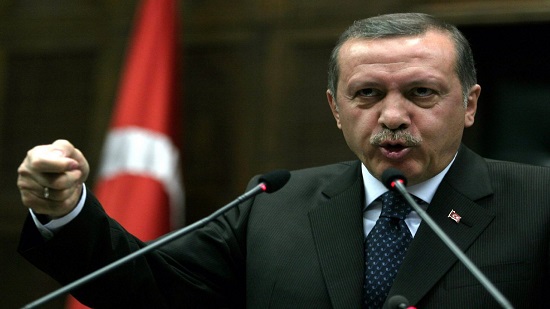
Politics’ incestuous relationship with soccer came full circle this week with the mass resignation of executives from the Turkish football federation and the firing of scores of officials, including referees, as part of the government’s witch-hunt against followers of controversial Islamic preacher Fethullah Gulen and other government critics. Intended to facilitate the weeding out of any Gulen supporters, the executives tendered their resignations five years after the conflict between Gulen and Turkish president Recep Tayyip Erdoğan first erupted in a match-fixing scandal that masked a battle for control of Fenerbahçe SK, the political crown jewel of Turkish soccer. Two days following the executive resignations, the federation said that it had fired 94 other officials it linked to July’s failed military coup.
It didn’t take long for the regime to crack down on Islamist and secular opposition after the military takeover on 3 July 2013. Anyone speaking out against regime injustices was discredited as a Muslim Brotherhood member and loyalist to the deposed president Mohamed Morsi. In a sense, a great opportunity was afforded to Coptic Christians to speak out against regime practices without drawing similar accusations. That opportunity was squandered. Instead of silence, which would have been understandable, the church sided with the regime and actively supported its military-led violations.
Everything and every action counts. It is not up to you to make decisions; you are restricted. You were placed behind a heavy metal door, which leaves a heavy impact on your soul. You move in a narrow space and have nothing but your bedding, which is used for all your activities, whether sleeping, sitting, or reading.
Inspired by their own logic and aided by their talent in justifying their sins, Egyptians tend to transform their disgraceful acts into morally acceptable practices. Living in a country where honour and integrity have been declining steadily over the years, has led many Egyptians, unconsciously, to acknowledge immorality as a cultural norm. Unfortunately, this kind of ignorance has led to a situation where many citizens tend to believe that they are strictly abiding by moral values, while accusing others of misbehaving. However, fact is that society as a whole is witnessing a serious decline in moral virtues.
Last week the government announced that it was in advanced negotiations with the International Monetary Fund and expected an agreement to be signed before year’s end for $21 billion in loans over the next three years, including $12 billion from the IMF and another $9 billion from other international institutions and financial markets
In March 2016, when the supporters of Islamic State (IS) wanted to establish a base in Ben Guerdane, Tunisia—a town along the Libyan border—it was the local population that rose up against them and worked with the security forces to defeat and oust them. They all vehemently worked against radicalism because they felt that it was a threat to their future, their newly founded freedom, and self-rule that they all support.
Adopting a democratic and fair law that ends discrimination among citizens will certainly open the door for the social cohesion that the state and citizens aspire to.
This week marks the anniversary of Yousef Shahin’s death. His death was quiet and simple, not reflective of the minutes of our lives which he had vociferously filled with his works. Works Shahin had inferred from the depths of his soul, and had run with, in order to build bridges between contradicting interpretations, without easing the pain and mystery of realising that everything within us is emotional.
In 1957, a young romantic with no social standing, depending solely on his wits, became a journalist earning just EGP 6 at Al-Gomhoria. Many dictators later, angels doing the sky’s bidding rushed to usher him to a place far better than the dusty environs of Cairo where he was born and where he died. In a shroud of personal tragedy this writer, 48 hours after his father’s passing, was afforded the opportunity to have a sit down with his beloved Cairo. And what a sit down it would be.
A dear friend, hours into the Turkey coup d’état, wrote, “How many articles are being written right now on Turkey entitled ‘the Egyptian Model’?â€
Aturkish demand that Pakistan close 28 primary and secondary schools associated with controversial, self-exiled Turkish preacher Fethullah Gulen has put the government in Islamabad in a quandary as it attempts to get a grip on an education sector in which militant Islamists and jihadists figure prominently. Turkish ambassador to Pakistan S. Babur Girgin’s demand for the closure of the schools operated by PakTurk International Schools and Colleges was part of a global effort to dismantle the network of Mr. Gulen, the Pennsylvania-based head of Hizmet, one of the world’s largest and wealthiest Islamic movements with businesses, schools, and universities in scores of countries.
I have written before about this subject, but there is something that prompts me to ask these questions again. Are all those who criticise the regime considered opponents of the government? Are all those who are opponents of the government put in a box and dubbed “Muslim Brotherhood� Do we consider all Brotherhood members to be terrorists?
The failed coup in Turkey has revealed an imbalance in the way of thinking between Islamist elites, the political Islamic current, and the military state in Egypt. If you take one look at the logic by which these “teams†analyse and react to recent events through traditional media platforms and social media networks, you will see that they are dealing with the changes in the way that fans of cockfighting would—there is no logic and no thinking. All you hear are the crazy cheers of fans who want to see more blood and death inside the ring.
One of the many difficulties facing President Abdel Fattah Al-Sisi lies in his handling of Egypt’s political dynamic from a single, incredibly narrow perspective. The president has tended to deal with political incidents and opponents separately and thus appears to be incapable of visualising the full picture. Applying a repressive policy to each individual political event gives the president the impression of having won. In reality, of course, winning small battles does not necessarily result in winning the entire war.
I will start by stating two quotes of the British icon Winston Churchill, former prime minister of the United Kingdom: “Democracy is the worst form of government, except for all the others.†It means that if democracy is the worst, then other forms of government are even worse. So, democracy is still better than other governing systems.
After years languishing behind competitors at home and abroad, Russia's iconic MiG aircraft manufacturer has been thrown a lifeline. The company is now building 46 brand-new MiG-29M fighter jets in a contract reported to be worth at least $2 billion. Yet despite the hints which have appeared in the Russian press over the past year, official confirmation remains elusive. The jets are being built for an unspecified buyer. Only a shareholder’s report released by a MiG component supplier has confirmed that the order is real. The document outlines a deal for 92 engines used in the MiG-29. With two engines in each fighter, the contract corresponds with reports of a 46-fighter contract in the works.
The military upheaval in Turkey, of which the final consequences are yet to be seen, highlights a major weakness in worldwide efforts to promote democracy. This event underscores the need to establish binding international legal principles to ban the recognition of military regimes as a result of coups d’état. Establishment of such principles, and the creation of the legal mechanisms for applying them, would foster democracy throughout the world.
Port Said, the Suez Canal city associated with the worst incident in Egyptian sporting history, is emerging as a prime locus of soccer-driven protest in a country that does not brook dissent.
The concept of a coup d’état is not new to Turkey. Friday’s event was the sixth coup d’état following the collapse of the Ottoman Empire, starting with the 1960 Turkish coup d’état, then the 1971 Turkish military memorandum, followed by the 1980 Turkish coup d’état, the 1993 alleged Turkish military coup, the 1997 Turkish military memorandum, and finally the current 2016 Turkish coup d’état attempt. On 15 July, a group of Turkish military leaders tried to carry out a military coup against the current Turkish president and his government. Was this a surprise to Recep Tayyip Erdoğan? What are the causes behind it? What will it end up accomplishing? How can we examine the political and security background of the current situation?
Stay home’ is the advice I often give to Egyptians who are unable to tolerate the behaviour of their fellow citizens. In Egypt, the moment a citizen steps out of his home, the wide-ranging drama that literally entails an endless list of interactions (with fellow citizens, vehicles, roads, the environment, etc) begins. The direct result is a society that is extremely exhausted, both mentally and physically. Decades of misconduct by the vast majority of Egyptians has led to the false conclusion that misbehaviour is an irreversible Egyptian cultural trait.
It sounds crazy, but it happened. I have slept in a tent that was only a few metres away from a pack of lions. I was in the middle of the savannah of Serengeti National Park in Tanzania. If I knew that this would be my fate, I may have thought twice before travelling to Tanzania for a wildlife safari. A wildlife safari is one of the greatest adventures one can experience, and it is something that will remain fondly in my memory for many years to come.
Mina M. Azer
The Coptic Christians are used to eat taro and reeds at the feast of Epiphany, which commemorates the baptizing of Jesus Christ in Jordan River.
 The Epiphany