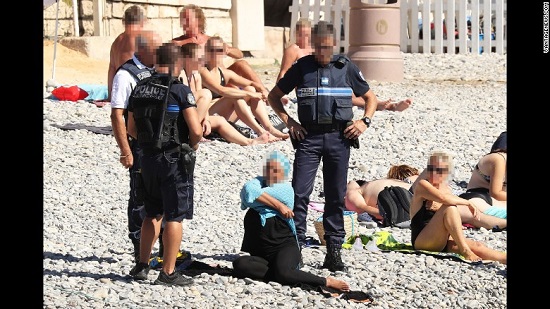
When France enacted its ban on "ostentatious symbols" in public schools in 2004, the so-called "veil ban" was justified under the guise of a warped form of European cultural relativism. It's just the French way, you see. Over the years, legislation in France has continued to encroach into the private sphere of Muslim citizens, with a keen focus on women. French officials push back against burkinis
IBM is one of the oldest companies in the IT industry, and they have become pioneers in the field. As pioneers, they are always leading the market towards huge transformations and revolutionary trends. IBM will introduce a glimpse of the next transformational era: the cognitive era.
Turkish president Recep Tayyip Erdogan holds Fethullah Gulen, the self-exiled conservative leader of Hizmet, one of the world’s biggest Islamic movements, responsible for the attempt to overthrow his democratically elected government. Erdogan asserts that Gulen’s followers infiltrated the military, police, judiciary, bureaucracy, and education system as well as the media. In response, he has arrested tens of thousands and fired a similar number of military and police officers, judiciary personnel, teachers and professors, and bureaucrats accused of being Gulen sympathisers.
India learned its lesson from China, and knows that industrial development is the best way for India’s economy to grow. Prime minister of India Narendra Modi knows this very well. After he implemented this strategy in Gujarat, he ruled for 13 years and achieved a great deal of success.
Ahmed Kamal, a medical student, was arrested by police and delivered to his family the following day via the mortuary. Ahmed had been sentenced to two years in absentia and only recently arrested and killed by Egyptian police, possibly tortured to death. Sometime in the past this may have been breaking news, causing outrage in Egyptian society, and perhaps even internationally. But in today’s Egypt, this is a repeated story, predictable in every way.
Egypt has recently been the subject of a number of deeply unflattering articles in the international business media. Many criticisms have been levelled at the actions, and inaction, of Cairo’s economic policy-makers. These criticisms have not made many friends in Egypt—so I do not propose to repeat them. I also think that, like much of today’s media coverage, the opinions are expressed at times with unhelpfully negative vocabulary and appear to appeal as much to sentiment as to reason.
The pressing issues for banks today are many. Apart from known concerns like capital and figuring out how to comply with the requirements of Basel III, I see that the enforcement of sanctions and embargoes is the nightmare that is really keeping bankers awake at night. Let’s start with the obvious. Sanctions and embargoes are political trade restrictions put in place against specific countries with the aim of maintaining or restoring international peace and security. Mostly, they are political trade tools imposed by the United Nations, the European Union, and the United States, which are known to place some of the most severe sanctions in the world.
The pressing issues for banks today are many. Apart from known concerns like capital and figuring out how to comply with the requirements of Basel III, I see that the enforcement of sanctions and embargoes is the nightmare that is really keeping bankers awake at night. Let’s start with the obvious. Sanctions and embargoes are political trade restrictions put in place against specific countries with the aim of maintaining or restoring international peace and security. Mostly, they are political trade tools imposed by the United Nations, the European Union, and the United States, which are known to place some of the most severe sanctions in the worl
The news ticker, or crawler as it is sometimes referred to, was first introduced in the United States on the NBC Today Show in 1952. After just a few months, the channel retired the idea. However, it eventually made a comeback. The news ticker was reintroduced in the 1980s on local TV news channels for announcing school closings and severe weather warnings. But, on 11 September 2001, the news ticker became a permanent fixture on TV news channels.
There is no question in the minds of Egyptians that we have lost most of our moral values and virtues in recent decades. No Egyptian will argue this fact; what we do argue about is the reason behind this deterioration in moral conduct. I am convinced that if we seriously and genuinely want to bring back our waning moral integrity, we must work on regaining three specific essential values: justice, tolerance, and inclusiveness.
Imagine this: you are sitting, sipping a cup of coffee in the morning and sifting through the pages of a literary weekly, Akhbar Al-Adab, and you happen upon this excerpt from a book. You read it and you are shocked. It has indecent sexual content and the characters are also smoking hashish! You can’t handle this, the words are physically assaulting you; you are literally falling ill. You experience heart palpitations and a drop in blood pressure. How can this be published? It offends public decency! It threatens the very fabric of our society.
The fact that the vast majority of Egyptians live in impoverished areas working insecure jobs and earning meager incomes that barely allow them to survive discredits, by default, the Egyptian state’s “stability argumentâ€! At the same time, the tiny portion of wealthy Egyptians who is supposed to be enjoying a stable, luxurious life, still has to deal with various unexpected challenges that make their lives vulnerable as well. The Egyptian state is attempting to advocate a state of ‘stability’ that – even before the outbreak of any revolutions – hasn’t existed for several decades.
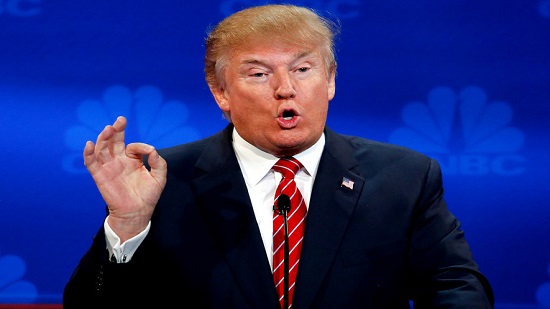
A tough political attack is a terrible thing to waste, but that is what Donald Trump has squandered by launching vague, sweeping accusations against Hillary Clinton at precisely the moment when newly released emails raise valid, specific concerns about whether Clinton improperly mixed her public and private interests while serving as secretary of state.
Abu Otaiba, the nom du guerre of a self-taught imam and Islamic State (IS) recruiter in Jordan, uses soccer to attract recruits. “We take them to farms, or private homes. There we discuss and organise soccer games to bring them closer to us,†Abu Otaiba told The Wall Street Journal in a recent interview.
The only authentic attempt to establish democracy in Egypt—the revolt against Mubarak in 2011— was a complete failure. There is no doubt that Mubarak’s entourage played a major role in bringing Egypt back to square one. Nevertheless, Egyptian politicians and revolutionaries should admit that they too bear a large part of the responsibility; a proper understanding of their shortcomings and limitations will better enable us to avoid further failure. Our key political weaknesses and faults are presented below.
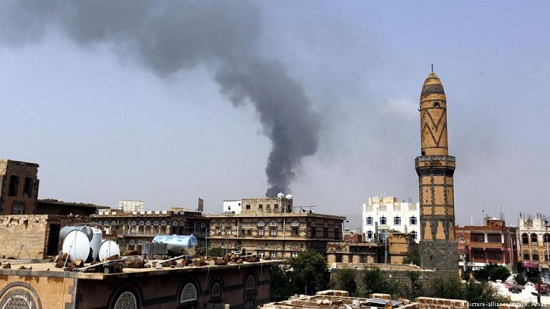
War has raged in Yemen for over 500 days. The international community seems to be indifferent to the suffering there. This is detrimental to the credibility of the United States and Europe, DW’s Matthias von Hein writes. Since March 26, 2015, the richest country in the Arab world has bombed the poorest country into ash and rubble – and mostly without any outcry from the rest of the world. What’s worse, Saudi Arabia does not operate on its own: It leads a coalition of nine nations and receives logistical support from the United States and UK. Of course, conflicts between Yemen’s factions are older than 500 days, and lives had previously been lost in the conflict that has pitted Houthi rebels and allied supporters of former President Ali Abdullah Saleh against forces loyal to his replacement, Abed Rabbo Mansour Hadi, who had fled to Saudi Arabia when the uprising began. But the massive deterioration of the humanitarian situation was certainly caused by the Saudi-led military coalition’s bombing campaign.
It has been just over three years since the dispersal of the Rabaa Al-Adaweya and Nahda sit-ins. It has been over three years since one of the biggest state perpetrated and sanctioned massacres in modern human history, as described by Human Rights Watch, and unless you marked the day of the anniversary—14 August—you probably haven’t even noticed. There were no huge demonstrations in the streets, no large yellow banners with the Rabaa sign, no pictures of the dead lingering over an angry mob yelling that the current regime is made of murderers and predicting the return of the “rightfulâ€, “legitimate†president—almost nothing.
Mohamed Khan has died?! This was the question of denial that followed the tragic news of his death. His death was followed by nothing but the silent sneaking of absence.
Private sector development is still a huge challenge for Egypt’s economy. The business climate should be one of the prime targets for the government, particularly as Egypt dropped down in the Doing Business ranking for 2015–2016. There could not be a better time to take the necessary legal steps to improve the business climate in Egypt. This is particularly relevant knowing that Egypt finally has a parliament after years of absence, but it will take more than amendments to the current legislation to stimulate business. New laws that meet the requirements of this era of Egypt’s history and restore investors’ confidence in the Egyptian market are a must.
Three years ago, on 14 August, the last thing anyone expected to watch on television in an Edinburgh pub was live coverage of the Rabaa Al-Adaweya sit-in dispersal in Egypt. The act had been brewing for quite some time by then and approved by people like myself. I belong to those who saw the necessity of confronting all forces who use religion politically in an attempt to gain wide social acceptance and superiority. In other words, I am against those forces with fascist orientations, claiming to be the representatives of God on Earth, and the sole fighters for righteousness. The events that unfolded at the 2012 Ittihadiya presidential palace clashes were vitally significant for revealing how far the Muslim Brotherhood was willing to go and what they were capable of doing to preserve their status in the new regime.
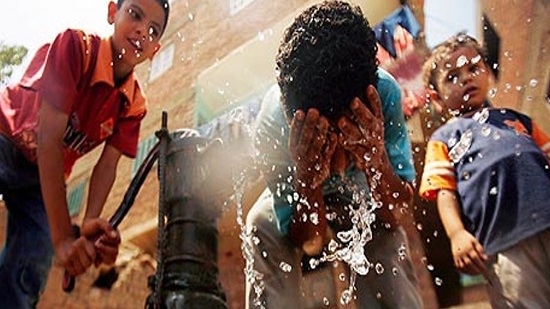
A recent UN report said that 18 countries in the Middle East will suffer a great deal by the year 2025 because of a serious water shortage. Some experts suggest that Israel is at the forefront of countries facing this problem, and that the 1967 war was actually aimed at gaining access to water resources in the West Bank. Today, Israel is fostering relations with Nile Basin countries in the hopes of getting a share of Nile water – something that late Egyptian president Anwar El-Sadat was inclined to facilitate had it not been for public outrage in Egypt.
Mina M. Azer
The Coptic Christians are used to eat taro and reeds at the feast of Epiphany, which commemorates the baptizing of Jesus Christ in Jordan River.
 The Epiphany