As is true in every country that accepts the terms of an agreement with the International Monetary Fund, it is often said in Egypt these days that the IMF is seeking to impoverish the Egyptian people and burden the country with foreign debt, and that price hikes are a consequence of the agreement. The only problem with this narrative is that it’s wrong. The simple, regrettable truth is that our economic policy—or rather, the lack thereof—is what brought us to this point, compelling us to seek foreign loans and institute austerity measures.
It is clear for those visiting Germany, reading about it, or working in or with it over recent years, that the refugee issue is no longer an internal matter only related to experts or whoever is interested. The issue seems to be an obsession, illness, or symptom of an incurable illness that will sweep all the other problems under the rug.
It seems that nearly seven years after the 25 January Revolution, some forces, elites, and platforms still have not absorbed the learned lessons. They have not given themselves the chance to reconsider their options in terms of dealing with the developments of the Egyptian political situation, as well as its security and objective aspects. Moreover, they have not absorbed the nature of the relationship of these developments with the vast majority of Egyptian citizens. They are the majority that does not belong to political or ideological currents. They have no loyalty towards any of the forces fighting in the political arena.
Who among us did not suffer when hearing the news of the over 200 souls who drowned in the sinking of an illegal migrant boat off Egypt’s coast? Most of them were young men who were desperate to realise the dream of becoming rich in Europe. In the end, they did not come to realise anything except death at the bottom of the sea. This tragedy is repeated from time to time and we have become accustomed to hearing news of illegal migrant boats and death tolls without the presence of effective actions to identify the causes of these tragedies and find solutions to them.
“Going native†is the blight of any foreign correspondent reporting to his Western media outlet from a “foreign landâ€. And yet “non-native†foreign coverage rarely provides the kind of complex and nuanced understanding of the highly complex and nuanced foreign realities it seeks to cover. Which raises the question: is the “foreign correspondent†the right way to go in a profoundly interconnected world of complex, global stories, or has the time come to move on towards a new realm of cross country/region conceived and executed journalism?
Again and for the umpteenth time I tell myself not to give Western media any undeserved attention and to ignore those who intentionally belittle from our efforts and tarnish what we hold dear and precious. And yet no matter how hard I try, sometimes I get so indignant that I must rebuttal, first to abate my anger, and second to illuminate those who care for the truth.
In the last few weeks, three important government policies have run into a hitch or been reversed entirely. The disarray this reflects should give us pause, especially since the policies had ramifications for the economy, which is at a critical point and cannot withstand more government ambiguity and unpredictability.
Human Rights Watch (HRW) has accused world soccer body FIFA of allowing FIFA-sanctioned matches to be played on occupied land in the West Bank in violation of FIFA rules and has demanded that the group ensure that future games be staged within the borders of Israel prior to the 1967 Middle East war.
It is film festival season in Egypt, and it is the time when lots of disgruntled people begin to express their frustration, disappointment, and dissatisfaction with these events' organisation, programming, and priorities. Many of these concerns are certainly legitimate, and indeed call for concrete action and solutions.
During the liberal years that started in 1919, the civil Coptic Society used to strongly participate in the charitable construction of schools, hospitals and non-governmental organisations.
Several years ago, even before the two revolutions, I was in a cab in Heliopolis minding my own business when the cab driver said something that translates to, “This is fishy!†“What?†I asked anxiously. He pointed to a man carrying a carton of bottled water walking out of a store. “That’s the fifth person I see in the last few hours buying bottled water,†he exclaimed.
Democracy and violence have disparate missions and routes that are not comparable. Yet, this reality should not keep us from admitting that while western countries, led by the United States, have failed to promote the spread of democracy to the Arab World, a small number of Arab terrorists have successfully managed to extend their violent activities beyond their countries’ borders and into the west. The philosophy, according to which democracy is not exportable and cannot be imposed on nations, is based on a true and valid argument. Nevertheless, the soundness of this viewpoint should not leave us empty-handed; numerous soft strategies that can be used to advocate for democracy (while evading the silly accusation of “interference in domestic affairsâ€) exist. Meanwhile, the perpetrators of terrorist acts, universally condemned by almost all civilians, have had more success carrying out quite a few terrorist activities not only within the Arab region, but also in many western countries.
After much wavering, the state finally announced an economic plan with a set of concrete fiscal and monetary measures designed to staunch the hemorrhage of the public budget and restore balance to the currency market.
I ended the previous paper with the question: is the Islamic dress code the symbol of the ‎rising hegemony of a religion? Of the return of the claims of religious people who want to ‎define what is acceptable or not in the public sphere? ‎
An Egyptian businessman with close ties to general-turned-president Abdel Fattah Al-Sisi has submitted a bid for the broadcasting rights of the Confederation of African Football (CAF) in a move that is widely seen as an effort to polish the image of Egypt, tarnished by massive abuse of human rights, failing economic policies, and a military coup that in 2013 put an end to the country’s first democratic experiment.
Egypt has signed a staff level agreement with the International Monetary Fund in order to receive loans worth $12 billion from the IMF and $3 billion from the World Bank as well as additional loans and deposits from the Gulf countries and dollar bonds ranging between $5 to $7 billion.
Several security-related incidents have had a substantial impact on Egypt’s tourism industry as of late. However, the country now seems to believe that these incidents are over and done with, and President Abdel Fattah Al-Sisi believes that the tourism industry is about to rebound.
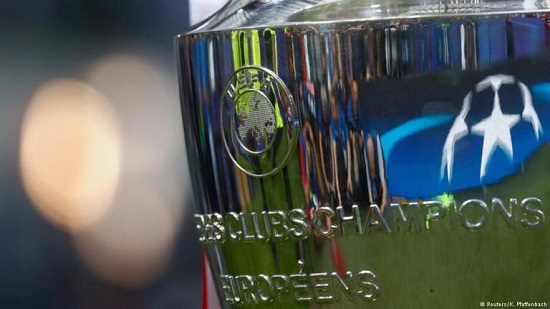
A new Champions League season is starting amid ongoing debate about its controversial upcoming reforms. The changes will only benefit the continent’s biggest clubs and damage UEFA, writes Olivia Gerstenberger. On Wednesday, a new UEFA president will be elected in Athens. And it is about time. There has been a power vacuum at European soccer’s governing body for months, and the shrewd bosses of the continent’s biggest clubs exploited the opportunity. They pushed through reforms, which were grudgingly signed off on by UEFA and are to come into effect in 2018.
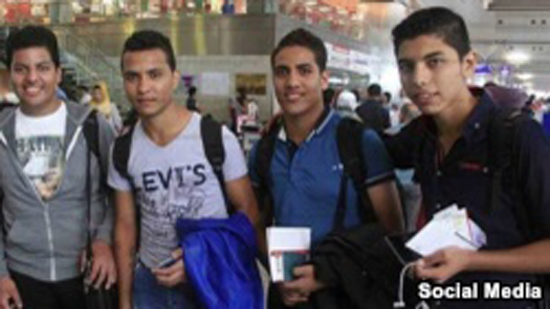
During the recent days, I was keen to follow the different reactions over the departure of four Coptic minors to Turkey seeking asylum in Switzerland. Despite their legal status as minors, they have been sentenced to five-year imprisonment in accusation of religious contempt.
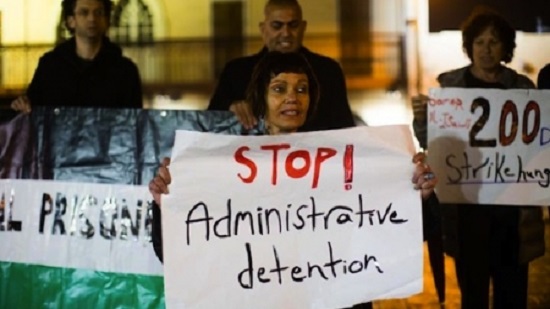
The number of detentions that the Israeli occupation army has inflicted on the sons and daughters of the Palestinian people is estimated to be one million since the beginning of the occupation in 1967. It is estimated that approximately 40 percent of all male adults have been subject to arrest or detention at the hands of the Israeli army in one way or another.
After the fall of the Berlin Wall in 1989, there appeared to be something of a pause in dramatic events for the United States and much of Europe.
Mina M. Azer
The Coptic Christians are used to eat taro and reeds at the feast of Epiphany, which commemorates the baptizing of Jesus Christ in Jordan River.
 The Epiphany