Continuing the series of articles attacking Egypt, which became rife after the downfall of the Muslim Brotherhood in June 2013, American researcher Steven Cook wrote in the latest issue of Foreign Affairs (November/December 2016) an article entitled “Egypt’s Nightmare: Sisi’s Dangerous War on Terror.â€
If there is a genuine intention to revise the protest law, as recommended by the youth summit held in Sharm al-Sheikh last week and attended by the president, then this would be a positive, welcome step But for the initiative to be celebrated, it must involve real, comprehensive change—it can’t be simply an attempt to burnish the country’s image. It must be accompanied by a repeal of other laws issued in the past two years that restrict freedoms. And it must demonstrate the state’s willingness to start fresh in how it approaches these issues.
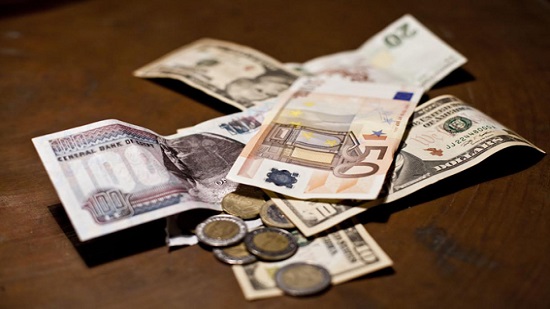
While the Egyptian pound was devalued officially months ago, talk has surfaced about further devaluations or a full-fledged currency flotation that leaves it at the mercy of both the regular and black markets. Ambiguity launched a frenzied rush to buy dollars and store them, considering the dollar a commodity in itself, coupled with feverish activity in the foreign currency black market.
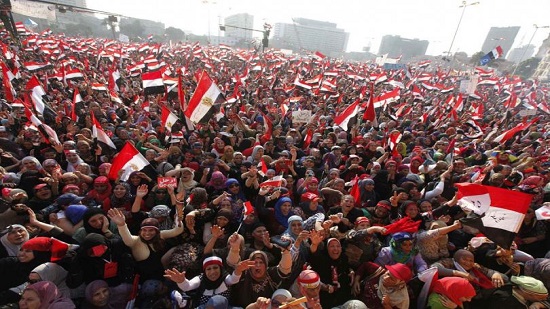
In January 2011, the majority of Egyptians, befuddled and apprehensive, stayed at home but watched closely as history unfolded. They knew that change was needed; they realised that the calls of those in Tahrir Square were warranted, but they were extremely anxious over short and long-term repercussions. In the short term, imminent danger had Egyptians nights-on-end guard their homes and possessions from looting and thuggery. As prisons and police stations got broken into, as official buildings and churches were set on fire, and as streets became treacherous, Egyptians suffered nerve-racking panic and curfew restrictions.
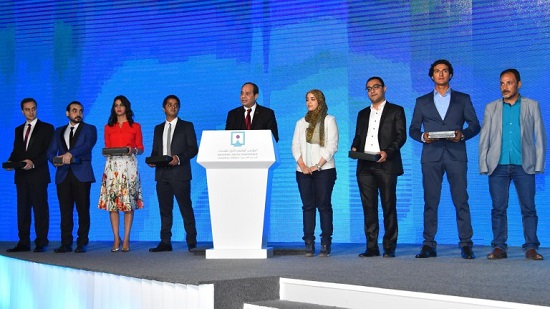
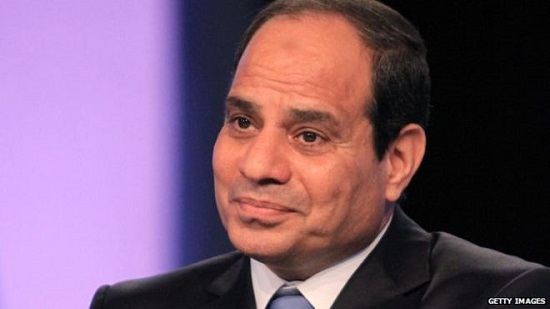
Faced with a drop in popularity, intermittent protests against rising prices, and calls for a mass anti-government demonstration, Egyptian general-turned-president Abdel Fattah Al-Sisi is seeking to appease the country’s youth, soccer fans, and activists with promises of change. Al-Sisi’s efforts that include a one-time lifting of a ban on spectators attending soccer matches and promises of revisions to Egypt’s draconic anti-Protest Law, as well as a review of the cases of youth detained without trial and monthly meetings with young people to follow up on resolutions of a national youth conference held earlier this month have, however, provoked sharp criticism, even before they got off the ground.
Apparently, seeing their child as a “mini-me†pleases many Egyptian parents who are quite eager to observe their life course (entailing the sum of their virtues and vices) portrayed in their children. Happiness and success are often measured in accordance with the parents’ particular perspectives, consisting mainly of children upholding their parents’ values, beliefs—and even career paths. While they may not always be aware of it, many parents manage, in one way or another, to imprint their passions, as well as their professions, upon their children, making sure that they inherit both.
I was always perplexed: equilibrium management is wise, but some issues deserve stronger intervention — a plan, will power, and relentless and sustained action. Equilibrium management can sum up widely different approaches. Farouk’s approach (if we exclude the first years) was “each force will have its timeâ€. Mubarak’s was, “I’ll find a playfield for everybody.†Mubarak tried to banish politics. Farouk was fond of this game and could be, when he devoted time to it, a subtle player. Farouk was bent on self-destruction, Mubarak on self-preservation. Regarding “grand designs,†I tend to consider them necessary and I’m worried for democracies that are unable to produce them. But in authoritarian regimes, they can be a blessing, and they can be a curse. For the analyst, assessing them is a difficult task, especially if you are not indifferent. There are further difficulties: how to decipher this grand design?
Pressured by human rights and trade union activists leveraging Qatar’s exposure as a World Cup host and influenced by subtle changes sparked by popular Arab revolts in recent years, young Qataris are pushing the envelope, broaching publicly hitherto taboo subjects like homosexuality, women’s dress codes, and citizenship. The pushing of the envelope may be the most marked in Qatar because the prospect of the World Cup in the Gulf state has focused attention on how it will deal with the expected influx of large numbers of soccer fans from less conservative and non-Muslim societies. It is nonetheless reflective of a wider trend in the region in which youth and women are seeking to broaden norms of public and social behaviour.
Hillary Clinton is feeling pretty good about the election. Almost all of the polls have moved decisively in her favor, the debates were a "disaster" for Donald Trump, and the GOP might be seriously at risk of losing control of the Senate and, just possibly, the House. During the third debate, Clinton once again demonstrated just how masterful she could be at the art of political combat, goading Trump into sharing his most provocative thoughts and mocking some of his most outlandish statements. There were moments when he seemed to be barely holding on as she went after his policies and personality.
Egyptian general-turned-president Abdel Fattah Al-Sisi’s failed economic policies are prompting protests and widespread expressions of discontent. While the grumbling is unlikely to mushroom any time soon into a popular revolt similar to the one that toppled Hosni Mubarak in 2011, it goes a long way to explain why Al-Sisi has refrained from lifting the ban on spectators attending Egyptian soccer league matches. The ban has been in place for much of the last five years.
A key critique of JASTA is that it gives US domestic law precedence over the international agreements that regulate diplomatic relations, and overrides the sovereign rights and immunity of a country that protect it from being prosecuted.
Just as we should never balance the budget on the backs of the poor, it’s an economic delusion to think you can balance it only on the wallets of the rich.†This seemed to be the beautified confession that the then UK chancellor of the exchequer and austerity guru George Osborne made to the Conservative Party Conference in October 2012. The UK’s economy was still suffering from the global financial crisis of 2007 which eventually cost the Labour Party its parliamentary majority in the UK’s 2010 general election. A new coalition government was then formed in which Osborne became in charge of the British economy as the UK’s chancellor of the exchequer, the equivalent post for a finance minister which is considered the second top job in British politics.
I imagine many people are sick of hearing about the investment law. Others may find it distasteful to discuss such a technical, secondary issue while the country is still reeling from the painful blow in Sinai and the fall of brave soldiers who gave their lives for the nation and its security and people.
Wow, you don’t use sugar,†is a statement that I often hear after ordering a cup of tea or coffee and declining the waiter’s request to add sugar. The fact that I am an Egyptian who does not put sugar in caffeinated drinks is often a cause for surprise and admiration among fellow citizens, known for their sugar cravings. It took me about a week to adapt to the taste of non-sweetened caffeinated drinks when I decided to kick the habit a while ago. However, the ultimate benefits of consuming unsweetened drinks are significant.
Both Nasser and Sadat had strong and powerful enemies, but Mubarak was different – and Western diplomats were often impressed by his abilities to sum up issues in simple yet clear and deep terms. In other words, great leaders are both a great resource and a great liability.
I, like many others, was surprised by the sudden decision taken by Saudi Aramco to stop supplying Egypt’s needs of petroleum products, despite the agreement between Egypt and Saudi Arabia stating that the latter will secure Egypt’s requirements for petroleum products at 700,000 tonnes per month for five years. The value of the agreement between the two countries amounts to $23bn to be repaid over 15 years. The agreement came to spare Egypt from the fuel crisis, while cancelling it puts Egypt in a difficult position and may cause a severe crisis similar to that we suffered during the era of the Muslim Brotherhood government.
By saving change for six months, I once bought my husband an Omega watch as a birthday gift. Sure it was many years back, and sure it was the least expensive watch in the store, but an Omega is an Omega. Just married, having not yet begun my teaching career, and living overseas, I couldn’t come up with the money to buy any gift, let alone an Omega watch, except by saving change. My husband still cherishes the watch as the gift that surprised him the most.
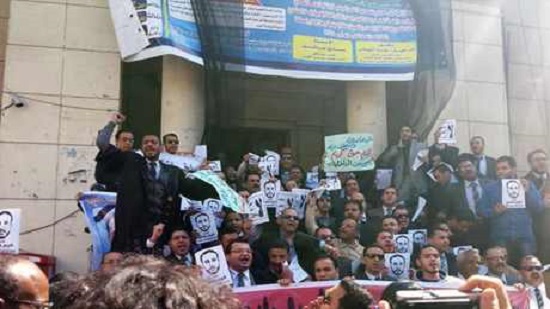
I can’t find the words to express my esteem for the legal profession and the Egyptian Lawyers Syndicate, which I’ve been a member of since 1987, and the decades-long role it has played in protecting rights, liberties, and the rule of law.
Sunni scholars in Saudi Arabia and their Shi’a counterparts in Iran may be at war over who is a Muslim, but there is one thing they agree on: soccer detracts from religious obligations. Iran, in the latest skirmish between soccer and Islam, is debating the propriety of playing a 2018 World Cup qualifier against South Korea on 11 October, the day Shi’a celebrate Tasua, the ninth day of the month of Moharram, one of the holiest days in the Shi’a calendar on which the faithful commemorate the martyrdom of Imam Hussein, the grandson of Prophet Muhammad.
I can say with a great deal of certainty that several years after the start of the Arab Spring, it has turned out to be a bitter winter. We would wake up every day as if nothing was around us except a dreadful nightmare. I call on you to look carefully at the economic conditions of the Arab Spring countries and think about the tragic scene before you. Sadly, the lower- and middle-class segments have been the most impacted. The stunning questions are: did the revolutions achieve their goals? Do we now have social justice as was expected? Do we now have more sound economic indicators than before? If you are not skilled in distortion, then the answer must be a big, fat “noâ€.
The story of 28 Christians who were killed under the tanks or by the bullets of the Egyptian military the night of 9 October 2011 has already been told. Demonstrators moved from the Cairene neighbourhood of Shubra and along the shore of the Nile before they were violently dispersed in front of the state television building. After five years, 9 October has become a reutilised ritual observed only by a few. For the majority, however, it is seen as a waste of time and amounts to a “pile of rubbishâ€.
Mina M. Azer
The Coptic Christians are used to eat taro and reeds at the feast of Epiphany, which commemorates the baptizing of Jesus Christ in Jordan River.
 The Epiphany