
Who was Alfred Nobel?
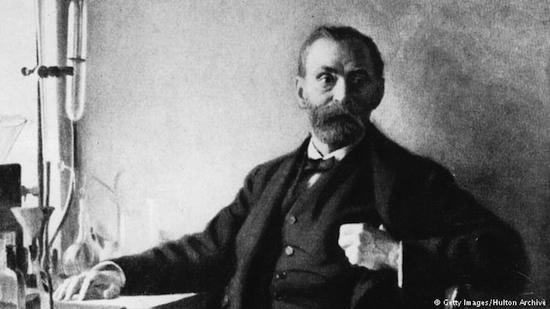
Alfred Nobel was born in Stockholm in 1833. Together with his father, who was an engineer, he developed the explosive nitroglycerine, which proved a commercial success.
Despite the danger of the project — Nobel s brother Emil was killed in an experiment in 1864 — he continued his research, patenting what he called dynamite in 1867. The invention proved very useful in the construction industry and Nobel traveled the world selling his product. When not on the road, he diligently conducted research and registered 355 patents in his name.
Nobel s talent as both a scientist and a businessman allowed him to amass a considerable fortune. He was also fluent in several languages, wrote poetry and drama, and had a deep interest in philosophy and literature.
Read more
- Controversies that have dogged the Nobel Prize for Literature
- German-language winners of the Nobel Literature Prize
Picture of dynamite rods (Imago/bonn-sequenz)
Nobel is now remembered for more than just his invention
How did the Nobel Prize come about?
After Nobel died in 1896, the opening of his will caused a considerable stir: He had left the majority of his money to the establishment of "prizes to those who, during the preceding year, shall have conferred the greatest benefit to mankind" in physics, chemistry, medicine, literature and peace.
Family members contested the will. Others were irked by the international nature of the new prizes. The biggest shock, however, was the Peace Prize. The name Nobel had been associated with explosives and weapons — not with peace.
Nobel s friend and former secretary Countess Bertha von Suttner, a vocal pacifist, is credited with having had a significant impact on the millionaire, and was awarded the Nobel Peace Prize in 1905.
Bertha von Suttner (picture-alliance/IMAGNO/Austrian Archives)
Von Suttner worked for Nobel for only a few months
"Perhaps my factories will put an end to war sooner than your congresses," he wrote the countess in 1891. Two-and-a-half decades before World War One, Nobel couldn t have foreseen just how wrong he would be.
Because Nobel had not composed his will with the help of a lawyer or specified how the prizes should be awarded, it took five years to sort out the details before the first Nobel Prize could be awarded in 1901.
In 1968, Sweden s central bank established the Sveriges Riksbank Prize in Economic Sciences in Memory of Alfred Nobel. The five original prizes are administered by the Nobel Foundation in Stockholm.
Medal for Nobel Peace Prize (picture-alliance/dpa/Scanpix Norway/B. Roald)
The Nobel Peace Prize is one of the most prestigious awards in the world
How are the winners selected?
Candidates are nominated a year in advance by qualified parties in the six relevant fields. Academics, politicians, prominent scientists, previous Nobel laureates and others receive personal invitations each year to nominate a candidate.
The nominators are selected in such a way so that as many different countries as possible are represented over time. Their nominations are kept secret for 50 years.
In his will, Alfred Nobel specifically indicated five Swedish institutions responsible for choosing the prize recipients in each category. The Royal Swedish Academy of Sciences has selected the Economics Prize laureates since 1969.